Small Laundry Room Storage Solutions Behind Closed Doors | for First-Time DIYers
A small laundry room can feel chaotic even when it is tidy, because detergent bottles, stain sticks, cloths, and cleaning tools are always on show. Closed-door storage changes that feeling without changing the size of the room. When everything has a door to close over it, the room reads as calm, the machines are easier to reach, and laundry day feels less like working in a cupboard full of supplies. For a first-time DIYer, the good news is that most of this storage is simple: a cabinet, a door organiser, a pull-out, or a curtain, fitted carefully and loaded sensibly.
The short answer: start above and beside the machines, not on the floor. A wall cabinet or closed shelving unit above the washer and dryer, an over-the-door organiser on the inside of the door, and one slim pull-out or rolling cart for the gap beside a machine will hide most of the clutter in a small laundry room. Keep daily items at hand height, heavy items low, and anything you rarely use higher up. Measure the door swing, machine lids, and ventilation gaps before you buy or build anything, because closed doors only work when they can actually close.
Why Closed Laundry Storage Works Better in a Small Room
Open shelves look good in photos, but in a working laundry room they collect dust, lint, and visual noise. Every bottle label, cloth, and odd-shaped tool competes for attention, and in a tiny room that competition makes the space feel smaller. Closed doors hide that variety behind one calm surface, so the eye rests on the room rather than on its contents. That calm surface also protects supplies from lint and splashes, which is useful above a washer and dryer.
Closed storage also forces a useful discipline: if it does not fit behind the door, it probably does not belong in the laundry room. That limit helps first-time organisers avoid buying more containers than they need. Start by taking everything out, grouping it by how often you use it, and only then choosing cabinets and organisers that fit those groups. A cabinet bought before the sort often ends up the wrong size for the things it was meant to hold.
Measuring a Laundry Nook So Closed Doors Actually Close
Measure three things before anything else: the width and depth of the space, the swing or slide of every door, and the clearances your machines need. Front-loaders need room to open fully, top-loaders need lid clearance above, and both need airflow around the back and sides. A cabinet that looks perfect on a website can block a lid, trap heat, or stop a door from opening, and those problems only appear after installation.
Also measure the height you can comfortably reach. The bottom shelf of an overhead cabinet should be reachable without a step stool for daily items, with higher shelves reserved for seasonal or backup supplies. Note any pipes, vents, taps, and electrical points on the wall, and keep storage clear of them. A simple sketch with measurements, even on paper, prevents most first-time mistakes and makes shopping for cabinets far less guesswork.
Overhead Cabinets Above the Washer and Dryer for First-Time DIYers
The wall above the machines is usually the largest unused surface in a small laundry room, and a closed cabinet there is the single biggest win. A ready-made wall cabinet, fitted into studs with proper fixings, is a realistic first project if you can use a stud finder, a level, and a drill. Choose a depth that leaves comfortable headroom over the machines, and keep the cabinet front flush so it does not jut into the room more than it needs to.
Inside the cabinet, use small bins or baskets to group supplies: detergents in one, stain treatments in another, cloths and pegs in a third. Label the bins, even if only you use the room, because labels stop the cabinet from drifting back into a jumble. Keep heavy detergent bottles on a lower shelf or in a floor-level cupboard instead, and never store anything on top of a dryer that blocks its vent or gets hot during a cycle.
Door Organisers, Inside-Door Racks, and Other No-Drill Closed Storage
If drilling feels daunting, or you rent, the inside of the laundry door is free storage that needs no tools. An over-the-door wire organiser or clear-pocket hanger holds detergent, dryer sheets, stain sticks, and small tools, and it disappears when the door closes. Choose a sturdy metal version rather than a flimsy plastic one, because a door full of cleaning bottles is heavier than it looks, and check that the organiser does not stop the door from latching.
Other no-drill wins include a freestanding over-machine shelf unit with doors or a curtain, a slim rolling cart that slides into a gap and can be pulled out, and a tension-rod curtain that hides open shelving or machines. Curtains are not as tidy as doors, but they are cheap, removable, and easy to change. For a first project, a combination of one door organiser and one rolling cart often hides more clutter than a single large cabinet, and both can move with you if you move house.
Pull-Outs, Tilt-Out Hampers, and Hidden Laundry Work Horses
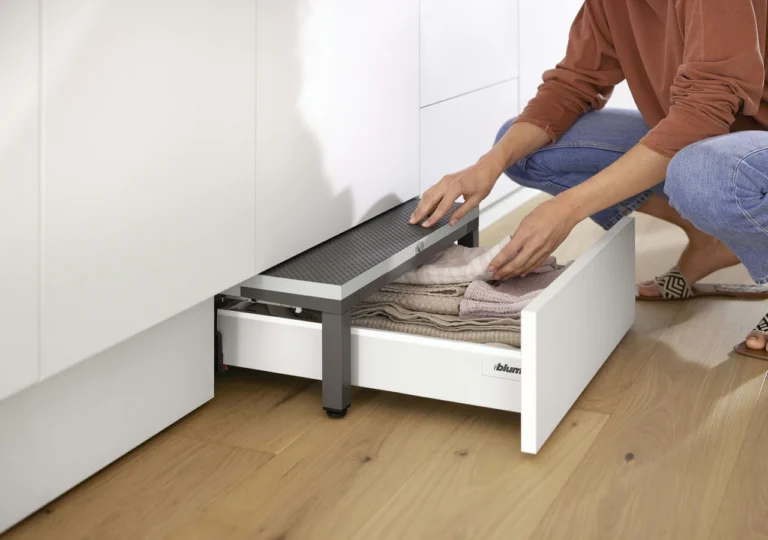
Pull-out storage suits the awkward gaps that cabinets cannot fill. A slim pull-out beside a machine can hold tall bottles upright, a pull-out ironing board folds away into a narrow cabinet, and a tilt-out hamper hides dirty laundry behind a cabinet front so the room never looks like a sorting pile. These are satisfying first projects when bought as kits, because the mechanism is already designed and the job is mainly careful measuring and fixing.
Plan pull-outs around the machines, not in spite of them. Leave clearance for hoses, vents, and the machine's movement during a spin cycle, and test the pull-out with the machine running before you load it heavily. A pull-out that rattles or blocks a vent is worse than no pull-out at all. Keep the heaviest items in the lowest pull-out, and leave a little spare space rather than filling every slot on day one.
Sorting, Labelling, and Keeping Closed Laundry Storage Tidy
Closed doors hide clutter, but they do not organise it by themselves. Sort supplies into daily, weekly, and occasional groups, and give each group a labelled bin. Daily detergent, stain remover, and dryer sheets go at hand height; weekly items such as a steamer or special wash bags go a little higher; occasional items such as spare parts or seasonal products go highest or in a separate cupboard. When everything has a labelled home, putting things away takes seconds instead of a decision.
Build a small weekly habit into the routine: when you start a load, glance inside the cabinet and return anything that has drifted. A five-minute reset once a week prevents the slow slide back to chaos far better than a big annual clear-out. If a bin is always overflowing, that is information, not failure — it means the group is too big, the bin is too small, or some items belong elsewhere in the house.
Laundry Storage Slip-Ups That Make a Small Room Harder to Use
The most common slip is blocking ventilation, machine access, or a door swing with a new cabinet. Another is overloading a door organiser or a high shelf until it sags or pulls fixings out of the wall. A third is hiding everything so well that daily items become hard to find, which leads to duplicate purchases and a cabinet full of half-used bottles. Closed storage should make the daily routine faster, not turn every load into a search.
Safety matters too. Keep detergents, especially pods and concentrated liquids, in closed, labelled containers out of reach of children and pets, and never decant chemicals into food containers. Keep ironing equipment and heat sources away from curtains and fabric organisers, and check that any cabinet above a dryer does not trap heat or lint. A tidy room is good; a safe room is essential, and the two usually go together when storage is planned rather than improvised.
Fitting Closed Laundry Storage Around Pipes, Vents, and Rental Rules
Pipes, taps, vents, and meters often sit exactly where a cabinet would be most convenient, and working around them is part of a first laundry project. Leave clear access to shut-off taps and vents, do not box in a dryer vent with a sealed cabinet, and keep storage at least a hand's width from hot pipes unless the cabinet is designed for that space. If you are unsure whether a pipe is a water supply, a drain, or a gas line, stop and check before drilling anywhere near it, because a fixing in the wrong place can cause a leak that dwarfs the cost of the cabinet.
Renters face a second set of rules. Check your lease before drilling, and favour no-drill storage if permission is unclear, because a cabinet that must be removed at move-out can damage plaster and cost more than it saved. Photograph the room before you start, keep original fixings and packaging, and choose freestanding or over-door pieces that leave the room in its original state. Good closed storage should improve the room while you live there without creating a repair bill when you leave.
Final Thoughts: Closed Laundry Storage That a First-Time DIYer Can Keep
Good closed laundry storage for a first-time DIYer is not the most elaborate system. It is a cabinet above the machines, a door organiser for small items, and one pull-out or cart for the gap, all measured to fit, loaded by frequency of use, and kept tidy with labels and a weekly reset. Start with the sort, measure twice, and add one piece at a time. The room will look calmer, laundry will take less hunting, and the doors — the whole point of the project — will actually close.
Small Laundry Storage FAQs Behind Closed Doors
Can I add closed storage to a laundry closet without drilling?
Yes. Over-the-door organisers, freestanding over-machine units, rolling carts, and tension-rod curtains all add closed or hidden storage without drilling, which makes them ideal for renters and first-time DIYers.
How high should a cabinet above the washer and dryer be?
Keep the bottom shelf within comfortable reach for daily items, and check lid clearance for top-loaders and door swing for front-loaders before fixing. Higher shelves are best for backup or seasonal supplies you use rarely.
What should I keep behind closed laundry doors?
Detergents, stain treatments, cloths, pegs, and small tools hide well behind doors. Keep heavy bottles low, daily items at hand height, and anything you use rarely higher up or in a separate cupboard.
How do I stop a closed cabinet from becoming a jumble again?
Use labelled bins grouped by daily, weekly, and occasional use, and do a five-minute reset once a week. If a bin keeps overflowing, the group is too big or some items belong elsewhere.
Is a curtain as good as a cabinet door in a laundry room?
A curtain hides clutter cheaply and is easy to remove, but it does not protect supplies from lint and splashes as well as a door. It works best as a first step or over open shelving while you plan a cabinet.
Can I put a cabinet directly above a dryer?
Yes, if you leave proper ventilation clearance, keep the cabinet clear of the dryer's vent, and avoid storing heat-sensitive items there. Check the dryer manual for clearances and never block airflow with storage.